California Payday Loan Online
A short-term loan governed by the California Deferred Deposit Transaction Law (CDDTL). Maximum loan is $300 total — you receive up to $255 in cash, the lender keeps up to $45 as a finance charge. We share your request with DFPI-licensed lenders in California. Approval and credit decisions are made by the lender, not by us.
Key takeaways for California
- Maximum cash received: $255 (Cal. Fin. Code § 23035)
- Maximum finance charge: $45; 15% of check face value
- Maximum term: 31 days; Rollovers prohibited
- One loan at a time; NSF fee capped at $15
- Funding generally within one business day after signing

A short-term loan governed by the California Deferred Deposit Transaction Law (CDDTL). Maximum loan is $300 total — you receive up to $255 in cash, the lender keeps up to $45 as a finance charge. We share your request with DFPI-licensed lenders in California. Approval and credit decisions are made by the lender, not by us.
Key takeaways for California
- Maximum cash received: $255 (Cal. Fin. Code § 23035)
- Maximum finance charge: $45; 15% of check face value
- Maximum term: 31 days; Rollovers prohibited
- One loan at a time; NSF fee capped at $15
- Funding generally within one business day after signing
Trusted by Thousands of California Customers
Verified by

conditions were transparent, and the interest rates were fair. The online gateway facilitated transaction and payment management.
Just wanted to share the jolly good vibes about this loan that made my holiday season extra special. Fast approval, low rates, and now I’m fa-la-la-la-loving it!
Monthly payments make it painless, and I’m a happy camper!!!
How Does an Online California Payday Loan Work?
The request process takes about four minutes. Decision speed depends on the DFPI-licensed lender that matches your application — most decisions arrive within an hour.
Submit the form
Personal and financial details, employment, bank account. Around four minutes. Soft credit pull at this stage.
Receive a decision
A DFPI-licensed California lender reviews your request. Most lenders respond within an hour.
Review the agreement
Read the loan contract carefully. APR, the $45 finance charge, payment date, and $15 NSF fee are all required disclosures.
Receive your $255
After signing, funds typically arrive within one business day. Same-day funding possible if you sign before the cutoff.
California Payday Loan Rules at a Glance
California payday lending is governed by the California Deferred Deposit Transaction Law (CDDTL), codified at California Financial Code §§ 23000–23106. Every figure below is a statutory limit, not a lender preference.
| Statute | Limit | What it means |
|---|---|---|
| § 23035(a) | $300 max check face value | The loan check cannot exceed $300 total ($255 cash + up to $45 fee) |
| § 23036(a) | 15% finance charge cap | Lender may charge no more than 15% of the check’s face value |
| § 23036(e) | $15 NSF fee max | If your bank returns the check unpaid, the lender may charge one $15 returned-check fee |
| § 23037(a) | 31-day maximum term | Term cannot exceed 31 days from the day the loan is made |
| § 23037(c) | No rollovers | Lender cannot renew, refinance, or extend a payday loan |
| § 23037(b) | One loan at a time | Borrower cannot have more than one outstanding CDDTL loan |
Important context. California also passed the Fair Access to Credit Act (AB 539, effective 2020), which caps interest at 36% APR for installment loans between $2,500 and $10,000. AB 539 does not apply to CDDTL payday loans under $300 — those remain governed by § 23036. For loans larger than $300, California’s installment loan products carry significantly lower APRs.
Payday Loan Calculator
Enter the loan amount, finance charge, and term to see your total repayment and APR. Use it to compare CDDTL payday loans against lower-cost alternatives like PAL loans (28% APR cap) or small-dollar bank loans.
Installment loans average 6–36% APR, and credit cards about 23.99%.
Exact CDDTL Cost Breakdown
Maximum statutory cost on a CDDTL payday loan in California. The 15% finance charge is the cap — lenders cannot legally exceed it, though they may charge less.
| Loan amount | Max fee (15%) | Total repayment | APR (14 days) | APR (30 days) |
|---|---|---|---|---|
| $100 | $15 | $115 | 391.07% | 182.50% |
| $150 | $22.50 | $172.50 | 391.07% | 182.50% |
| $200 | $30 | $230 | 391.07% | 182.50% |
| $255 | $38.25 | $293.25 | 399.69% | 186.55% |
Military Lending Act exception. Under federal MLA (32 CFR Part 232), the cap for active-duty servicemembers and their dependents is 36% MAPR regardless of state. California CDDTL payday loans at 391–460% APR exceed that ceiling and cannot legally be sold to covered borrowers.
Where the 2017 CFPB Rule Stands
Current status of federal payday lending regulation
The CFPB’s 2017 Payday Lending Rule originally required lenders to assess a borrower’s ability to repay before issuing short-term loans. The ability-to-repay provisions were repealed in 2020. The rule’s payment-withdrawal restrictions remain in effect federally. California’s CDDTL operates as a state-level framework regardless of federal underwriting standards, so California-specific protections (15% fee cap, no rollovers, one-loan-at-a-time) remain unchanged.
Alternatives to Direct Lender Payday Loans
Payday loans are expensive. California has unique alternatives — including credit unions with PAL loan programs, AB 539-protected installment products, and earned-wage access through major employers. Try these first.

California Credit Union PALs
SchoolsFirst, Golden 1, and Patelco offer Payday Alternative Loans capped at 28% APR. Amounts from $200 to $2,000. Membership is open to most California residents.
28% APR cap · $200–$2,000

Cash Advance Apps
Dave, EarnIn, and MoneyLion let you access part of your next paycheck early. Usually up to $500 with no mandatory interest. Tips or subscription fees may apply.
Up to $500 · No mandatory interest

Small-Dollar Bank Loans
Bank of America Balance Assist ($500) and U.S. Bank Simple Loan ($100–$1,000) offer fixed repayment plans with significantly lower fees than payday products.
$100–$1,000 · Fixed repayment

Installment Loans (AB 539)
California installment loans between $2,500 and $10,000 are capped at 36% APR under the Fair Access to Credit Act. Available from licensed CFL lenders.
$2,500–$10,000 · 36% APR cap

Employer Earned-Wage Access
California employers including Walmart, Hilton, and many state employers offer earned-wage access through DailyPay or Payactiv. Often free to the worker.
Often $0 cost · Through HR

211 California
211.org connects callers to local rent, utility, food, and emergency cash assistance. Many CA counties have specific hardship grant programs.
Often grant-based · No repayment

Family or Friends
A short written agreement protects both sides. No interest, no credit-bureau reporting, no rollover risk.
No interest · Personal arrangement

Credit Card Cash Advance
Higher APR than purchase rate, no grace period, but generally well below the 391–460% range of payday loans.
Faster repayment · Lower APR
What Do You Need to Qualify?
Platform-level requirements. Individual DFPI-licensed lenders set their own additional criteria, including minimum income thresholds and acceptable income types. Some lenders accept benefits as primary income; others do not.
- Age: 18 or older
- Residency: California resident; valid CA ID
- Income: Regular income, typically $1,000+/month
- Banking: Active checking account in your name
- Contact: Valid email and US phone number
Check your eligibility
Soft credit pull at this stage. Lender may run a hard pull if they make you an offer.
Apply NowI read and agree to Terms, Rates, Privacy Policy, before submitting loan requests.
California Store Locations
In-person service for California residents who prefer to apply with a manager. Same-day funding available if you sign before the cutoff.

Why 15M Finance for California Loans
We are not a lender. We connect California residents with DFPI-licensed direct lenders, and individual credit decisions belong to those lenders.
Our network operates exclusively with California-licensed providers regulated by the Department of Financial Protection and Innovation (DFPI) under the California Deferred Deposit Transaction Law. We verify license status with the DFPI registry quarterly.
There is no fee from us for the connection service. Lender fees and APRs are disclosed in the loan agreement before signing, as required by federal Truth in Lending Act and California CDDTL.
Borrow Carefully If You Borrow at All
CDDTL protects California borrowers from rollovers and stacking, but a single $45 fee on $255 still translates to a 391% APR. These habits limit the damage.
- Borrow only what you need to cover the shortfall. You may receive up to $255 cash, but if you need $180 to cover a bill, ask for $180. Each additional dollar borrowed compounds the fee.
- Map the repayment to the next pay date before signing. CDDTL prohibits rollovers, which is a protection — but it also means a missed payment goes straight to collections and NSF fees instead of automatic renewal.
- Understand the true cost as an APR. A $45 fee on $255 looks modest. As an APR on a 14-day loan, it is 460%. Required disclosure under TILA (12 CFR Part 1026) makes this number explicit in the loan agreement.
- Avoid stacking loans. California already prohibits more than one CDDTL loan at a time, but borrowers sometimes take a payday loan and an installment loan simultaneously. Call a credit counselor at the NFCC (nfcc.org) before stacking.
When a Payday Loan Is the Wrong Tool
If any of these describe your situation, a payday loan is likely to cause more harm than help. California residents can speak with a free credit counselor through the National Foundation for Credit Counseling.

Reasons to walk away
- You cannot realistically repay $293.25 on the next pay date
- You are already carrying high-interest debt (credit cards, medical, prior loans)
- The expense is recurring rather than one-time (rent, utilities, ongoing childcare)
- You qualify for a California credit union — SchoolsFirst, Golden 1, or Patelco at 28% APR
- Your credit needs rebuilding — payday loans do not report positive history to credit bureaus
- You are an active-duty servicemember or dependent — federal MLA caps fees at 36% MAPR
Key Terms in a California Loan Agreement
Federal TILA and California CDDTL both require lenders to disclose these in every short-term loan contract. If a lender does not provide these terms in writing before you sign, that is a red flag — walk away.
California Payday Loan FAQ
How much can I borrow with a California payday loan?
The legal maximum is $300 total under Cal. Fin. Code § 23035. That breaks down as up to $255 in cash to you, plus up to $45 (15%) in finance charges to the lender. You cannot legally take out more than one CDDTL loan at a time.
When will I receive the money?
After you sign the loan agreement, funds typically arrive within one business day. Same-day funding is possible if you sign before your bank’s cutoff time, but it depends on the lender, your receiving bank, and any remaining verification steps. We never guarantee same-day funding upfront.
Can I extend or renew my California payday loan?
No. Cal. Fin. Code § 23037(c) prohibits rollovers and renewals in California — this is a state-level protection that does not exist in many other states. If you cannot repay on time, contact the lender before the due date to discuss a hardship plan. NFCC-affiliated credit counselors (nfcc.org) provide free guidance.
Can I cancel my payday loan if I change my mind?
California does not have a statutory right of rescission for payday loans under CDDTL. Some lenders allow same-day cancellation as a courtesy if you return the principal in full before the day ends, but this is at the lender’s discretion. Ask before signing.
What credit score do I need?
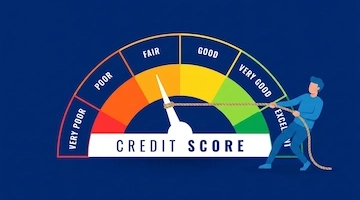
There is no minimum credit score at the platform level. DFPI-licensed lenders set their own policies. Some accept FICO scores below 580; others have higher thresholds. Lower scores typically mean smaller approved amounts.
How long does approval take?
Most applications receive a lender decision within an hour. The form itself takes about four minutes. After signing, funding takes up to one business day.
Do you run a credit check?
15M Finance does not perform credit checks. DFPI-licensed lenders in our network usually do — some run soft pulls only, others move to a hard pull once an application has been forwarded to them. The specific credit-check disclosure is in your loan agreement before you sign.
Are $255 payday loans only available in California?
The specific $255-cash structure is California-only because it reflects the CDDTL math ($300 maximum check face value minus the maximum $45 finance charge). Other states have their own statutory limits — some prohibit payday lending entirely, others permit larger or differently-structured loans.