What APR is, and why it matters
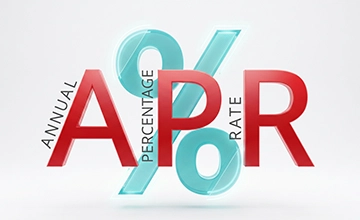
Annual Percentage Rate is the one number that lets a borrower compare the true cost of very different loans. This report draws the mechanics, the limits, and the policy stakes out of four primary documents.
Table of Contents
- The single comparison metric, and where it breaks
- Why the same fee becomes a bigger rate over a shorter term
- $300 for 30 days: payday loan against a credit card
- Lower APR does not mean lower cost
- Apples to apples: where the metric earns its keep
- Small-business financing: rates that go undisclosed
- APR exposes the long-term cost of a short-term product
- How rate fields are recorded in mortgage performance data
- Bibliography
The single comparison metric, and where it breaks
APR is defined in federal law as the cost of credit expressed as a yearly rate. Unlike a simple interest rate, it folds fees into the figure, which is why the Truth in Lending Act has required its disclosure for more than fifty years.[2] Its strength is comparison: it puts a credit-card advance, a mortgage and a payday loan on one axis.[1]
The same property that makes APR powerful also makes it sensitive to time. A short loan annualizes a small fee into a large rate, so APR climbs steeply as terms shorten – the reason a one-month $500 loan reads at 110% while a far larger, longer loan of the same family reads near 39%.[2] Total dollar cost moves the opposite way, which is the comparison trap this report maps.[2] Where disclosure is not required – payday products marketed in fees, and small-business financing outside TILA – borrowers and owners systematically misjudge cost and pick more expensive products.[1][3]
Methodology & sources. Figures are drawn from four primary documents: a Center for Responsible Lending brief on payday APR (2022), an AFSA Education Foundation consumer guide to APR (2013), small-business APR-disclosure testimony to the Maryland General Assembly (2024), and the Ginnie Mae Loan Performance File layout (2023). No fresh web sources were added at the user’s request, so every number here traces to one of these four. The Ginnie Mae file is a data-field specification rather than a statistical source; it is used only to show how interest-rate and insurance-rate fields are recorded in mortgage performance data, and contributes no APR statistics. Dollar examples are illustrative figures from the cited documents, not market averages.
Why the same fee becomes a bigger rate over a shorter term
APR behaves like miles per hour – it combines an amount with the time you carry it. Hold a 15% simple-interest loan for a full year and APR is 15%; pay it back in six months and the same charge annualizes to 30%.[1]
APR rises as the repayment window shrinks
A fixed 15% charge on a loan, expressed as APR across different carry periods. Source: CRL, Why APR Matters, 2022 [1].
| Carry period | Effective APR |
|---|---|
| 12 months | 15% |
| 6 months | 30% |
| 3 months | 60% |
| 1 month | 180% |
The mechanism is arithmetic, not opinion. Because APR scales the charge to a yearly basis, halving the term roughly doubles the rate. This is exactly why a lender can market a payday product as a low “15% fee” while its annualized cost runs into triple digits.[1] APR strips that framing away by forcing every cost onto the same annual ruler, including fees that sit outside the headline interest rate.[2]
$300 for 30 days: payday loan against a credit card
When all costs are placed on the APR ruler, a product that looks cheaper by its sticker rate can be twenty times more expensive in dollars.[1]
Dollar cost of borrowing $300 over 30 days
Two-week payday loan carried one month (two $45 terms) vs an 18% APR credit-card charge; cash-advance figure adds a 5% advance fee. Source: CRL, Why APR Matters, 2022 [1].
| Product | Headline rate | 30-day cost |
|---|---|---|
| Credit card balance (18% APR) | 18% APR | $4.50 |
| Credit-card cash advance (18% APR + 5% fee) | 18% APR + fee | $19.50 |
| Payday loan (two $45 terms) | “15% fee” | $90.00 |
The payday loan’s “15%” framing reads as cheaper than the card’s 18% APR, yet the dollar outcome is the reverse: $90 against $4.50 on a plain balance, or $19.50 once a cash-advance fee is added.[1] The gap is the whole argument for mandatory APR disclosure – without a shared metric, the comparison the borrower is invited to make is the wrong one.[1]
Lower APR does not mean lower cost
Across six worked examples from the AFSA consumer guide, APR falls steadily as loans get larger and longer – while the actual dollars paid rise. Reading APR alone inverts the truth about cost.[2]
As loans grow, APR falls but total finance charge climbs
Six illustrative installment loans. Bars: total finance charge ($). Line: APR (%). Source: AFSA Education Foundation, Understanding APR, 2013 [2].
| Example | Term (mo) | Amount financed | APR | Finance charge |
|---|---|---|---|---|
| 1 | 1 | $500 | 110% | $46 |
| 2 | 6 | $500 | 74.9% | $115 |
| 3 | 6 | $1,000 | 53.4% | $161 |
| 4 | 12 | $1,000 | 47.0% | $273 |
| 5 | 24 | $1,000 | 43.5% | $514 |
| 6 | 24 | $2,000 | 38.8% | $905 |
Examples 3, 4 and 5 borrow the same $1,000. The first of them carries the highest APR and the highest monthly payment but the lowest total cost; the last carries the lowest APR yet costs the most overall.[2] The guide’s own conclusion is that APR is one factor, useful only when comparing loans of similar size and duration, and that total out-of-pocket cost is often the figure that matters more.[2]
APR is a very useful tool when comparing similar kinds of loans with similar terms – and a misleading one when the loans differ in size, term or fee structure.Paraphrased from AFSA Education Foundation, Understanding APR, 2013 [2]
Apples to apples: where the metric earns its keep
The same guide is clear that APR is the right instrument for like-for-like shopping – the case it was designed for.[2]
Where APR compares cleanly
On a 30-year fixed mortgage, APR lets you weigh one offer with higher fees and a lower rate against another with the reverse, because all the fees and interest are already calculated into a single number.[2] The same holds for shopping one auto loan against another.[2]
Where it misleads
APR becomes confusing across different product types – a mortgage against a vehicle loan, or any small-dollar loan under $3,000 – because terms and fee structures diverge. Even the CFPB notes APRs are not always provided or inclusive of every fee, such as overdraft charges.[2]
Two structural facts sit underneath this. Credit score feeds directly into the APR a borrower is offered, so stronger credit histories draw lower rates and more approvals.[2] And fixed origination costs – underwriting, compliance, overhead – are similar whether a loan is $2,000 or $20,000, so smaller loans carry higher APRs even when their dollar cost is lower.[2]
Small-business financing: rates that go undisclosed
Small-business financing is not covered by the Truth in Lending Act. Providers can advertise factor rates and fee rates while the true annualized cost stays hidden – and the Federal Reserve’s own recalculation shows how wide the gap is.[3]
Advertised terms vs the APR the Federal Reserve calculated behind them
Three sample offers of $50,000 repaid over 6 months; APRs estimated by Fed researchers and not disclosed to borrowers. Source: Borrowers Bill of Rights testimony citing Federal Reserve, 2024 / 2019 [3].
| Advertised as | Total repayment | Estimated APR (undisclosed) |
|---|---|---|
| 1.15 factor rate | $59,000 | 70% |
| 9% simple interest | $54,500 | 46% |
| 4% fee rate | $56,500 | 45% |
A “9% simple interest” offer carries a higher real cost than a “4% fee rate” offer once both are annualized, which is precisely the confusion the Fed found owners fall into without disclosure.[3] Support for fixing this is broad: in polling commissioned for the testimony, nearly eight in ten small-business owners back a law requiring APR and full-cost disclosure on business loans.[3]
Small-business owner support for mandatory APR disclosure
Share of owners by position on a uniform disclosure law. Source: Small Business Majority polling, via Borrowers Bill of Rights testimony, 2024 [3].
| Position | Share |
|---|---|
| Strongly support | 44% |
| Somewhat support | 34% |
| Somewhat oppose | 12% |
| Strongly oppose | 4% |
| Don’t know | 6% |
APR exposes the long-term cost of a short-term product
Payday loans are marketed for short-term use, but the repeat cycle is the norm rather than the exception – and APR is what reveals the cost across the full cycle.[1]
Three-quarters of payday-lending revenue comes from borrowers with ten or more loans in a year, a pattern the loan terms are built to produce.[1] At triple-digit APRs, that cycle is linked to greater difficulty paying bills, delayed medical care, involuntary bank-account closures, higher bankruptcy risk and weaker job performance.[1]
The policy response converges on one number. Eighteen states and the District of Columbia cap payday loans at roughly 36% annual interest, and the cap has cleared ballots by wide margins – 83% of voters backed it in Nebraska.[1] CRL recommends state and federal 36% APR caps that count all fees.[1]
Where 36% APR caps stand, and how voters treat them
State adoption of ~36% payday caps and a representative ballot margin. Source: CRL, Why APR Matters, 2022 [1].
| Measure | Value |
|---|---|
| States capping at ~36% | 18 |
| Plus | D.C. |
| States without the cap* | 32 |
| Nebraska ballot support | 83% |
*Derived as 50 minus 18 capped states; D.C. counted separately, per [1].
How rate fields are recorded in mortgage performance data
APR is a borrower-facing disclosure. In loan-level mortgage datasets the recorded fields are the note interest rate and insurance-premium rates – useful context for what is, and is not, captured downstream.[4]
Ginnie Mae’s Loan Performance File records each active single-family loan’s current interest rate, its original term and age in months, loan-to-value, credit score, and – for FHA loans – separate upfront and annual mortgage-insurance premium rates.[4] No single “APR” field exists in the layout: the annualized, all-in cost a borrower sees at signing is assembled from the note rate and these fee components rather than stored as one number.[4] It is a concrete illustration of the report’s through-line – the rate and the fees live in different places, and only APR pulls them together.
| Field | What it records |
|---|---|
| Loan interest rate | Current note rate of the loan |
| Upfront MIP | One-time FHA mortgage-insurance premium rate |
| Annual MIP | Recurring FHA mortgage-insurance premium rate |
| Loan gross margin | ARM margin added to the index to set the new rate |
| Credit score | Borrower credit score – a driver of the rate offered |
Bibliography
-
[1]
Center for Responsible Lending, Why APR Matters, March 2022
Figures: $300/30-day cost comparison; 75% repeat-borrower revenue share; 18 states + D.C. with ~36% caps; 83% Nebraska ballot support; simple-interest-to-APR time relationship. link
-
[2]
AFSA Education Foundation, Personal Loans 101: Understanding APR, 2013
Figures: six worked loan examples (APR 110% to 38.8%, finance charge $46 to $905); TILA APR definition; credit-score and fixed-cost relationships; CFPB note on small-dollar APR limits. link
-
[3]
Borrowers Bill of Rights / Responsible Business Lending Coalition, Annual Percentage Rate (APR): A Critical Component of Small Business Financing Transparency, testimony to the Maryland General Assembly, 2024 (citing Federal Reserve Bank of Cleveland, Uncertain Terms, 2019, and Small Business Majority polling)
Figures: APRs up to 350% undisclosed; three $50,000 Fed examples (70%, 46%, 45% estimated APR); 79% owner support for disclosure. link
-
[4]
Ginnie Mae, Loan Performance File Layout, Version 1.0, May 2023
Used for: recorded rate fields (loan interest rate, upfront and annual MIP, gross margin, credit score). Contributes field definitions, not APR statistics. link