How to Get a Loan with a Bad Credit Score in 2026
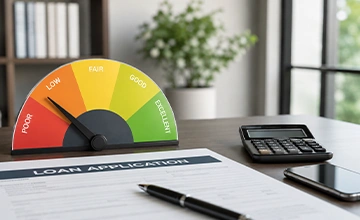
Having “bad credit” means that you are viewed as a high-risk borrower by lenders. This is based on your financial history, missed payments, high debt, or limited credit record. In the U.S., this risk is calculated using two major scoring models: FICO and VantageScore. While both use a scale of 300 to 850, they define “bad” differently. FICO categorizes scores from 300 to 579 as Poor, while VantageScore labels 300–549 as Very Poor and 550–649 as Poor.
Table of Contents
- Can You Get a Loan with Bad Credit?
- Types of Loans Available for Bad Credit Borrowers
- How Lenders Evaluate Bad Credit Applications
- How to Get a Loan With a Bad Credit Score: Step-by-Step
- Credit Score Ranges and Loan Accessibility
- Legal Framework: Your Rights Under Federal Law
- How to Improve Approval Odds Before Applying
- How Long Does It Really Take?
- Common Mistakes and Loan Scams
Key points
- Loan options for bad-credit borrowers include secured loans, installment loans, credit-builder loans, co-signed loans, credit union products, and high-cost payday loans.
- When credit scores are low, lenders place heavy emphasis on payment history, debt-to-income ratio, credit utilization, employment stability, and banking activity.
- Common red flags in the bad-credit loans market include guaranteed approval claims, upfront processing fees, misleading APR framing, and rollover traps.
- Before applying: dispute any errors on your report, get card utilization under 30%, and lay off new credit for 90 days. One to three billing cycles can make a real difference.
Disclaimer: This article is for general informational purposes and is not financial, legal, or credit advice. Consult a licensed advisor for your situation.
Can You Get a Loan with Bad Credit?
Yes, securing a loan with poor credit is still possible. Although a low credit score signals risk that leads to higher interest rates or additional requirements like a co-signer, not all financial institutions judge your creditworthiness the same.
Many online lenders and credit unions are more likely to approve applicants with scores below 600 by considering steady income, a healthy debt-to-income (DTI) ratio, positive cash flow, and a clean banking history free of overdrafts.
Types of Loans Available for Bad Credit Borrowers
Loans backed by collateral, supported by a co-signer, or evaluated through alternative underwriting offer easier approval for lower-tier borrowers, give you access to funds, and help rebuild credit.
Installment Loans
With an installment loan, a lump sum is deposited into your account, and you pay it back in fixed monthly amounts over a set period. For lower-score applicants, online lenders and credit unions are easier to qualify with because traditional banks usually only approve stronger credit profiles. Subprime borrowers generally face APRs between 18% and 36%, though state-licensed lenders specializing in bad-credit borrowers can charge significantly more — sometimes well into triple digits.
Secured Loans
These loans require you to pledge an asset as a guarantee to the lender. For borrowers with low scores, this increases approval odds while reducing lender risk. Secured loans offer better terms than unsecured ones: APRs from roughly 8% to 36%+ depending on collateral type and credit — borrowers with damaged credit should expect to price toward the upper end of that range. Amounts vary between $500 and $75,000. The risk here is that defaulting on the loan can jeopardize the asset you put up.
Credit-builder Loans
Designed to build or repair credit rather than provide immediate cash, these loans work like a forced savings account. The lender holds $300 to $3,000, depending on the provider, in a locked account while you make monthly payments over 6 to 24 months. Each on-time payment is reported to the credit bureaus, building a positive payment history. Once the loan is paid off, the funds are released to you. Typically offered by credit unions and community banks, these loans are a structured way to build payment history.
Payday Loans
These short-term, high-interest loans offer small amounts — typically $100–$1,000 depending on state caps. Lenders charge a flat fee between $15 and $20 per $100 borrowed. The entire principal, plus the fee, gets paid in a single lump sum on your next payday.
Note that payday lending is banned or capped at rates that effectively prohibit storefront operations in roughly 18 states and DC. Active-duty service members and their dependents are protected by the Military Lending Act, which caps the all-in MAPR at 36% on most consumer credit.
Co-signed Loans
Personal loans are hard to get with bad credit, and when approved, they often come with high APRs. Adding a co-signer with good credit (670+) can improve both your approval odds and your terms, bringing APR down to the 12%–24% range. You receive the funds and handle all payments, but the co-signer shares equal legal responsibility for the debt.
Credit Union Loans
Federal credit unions offer a range of products for borrowers with poor credit, with some using alternative underwriting to approve fixed-rate loans from $1,000 to $50,000. Amounts and terms vary by institution, and repayment periods extend up to seven years. They also offer NCUA-regulated Payday Alternative Loans (PALs) as a lower-cost alternative to traditional payday loans: PAL I covers $200–$1,000 with terms of one to six months, while PAL II allows up to $2,000 over one to twelve months. Both are capped at 28% APR with a maximum $20 application fee.
How Lenders Evaluate Bad Credit Applications
When credit scores are low, lenders evaluate other available markers. Data points mentioned below allow loan providers to get a firm understanding of your finances, debt management, and the risk they face when giving you credit.
Payment History
Lenders request credit reports to assess your payment history and use this as a predictor of default. Focusing primarily on your recent financial activity, it accounts for 35% of your FICO score and heavily influences your VantageScore. A missed payment 6 months ago is more damaging than mistakes 6 years ago. Underwriters need this data to determine whether you honor credit obligations on a regular basis.
Debt-to-Income Ratio (DTI)
DTI measures your capacity to pay off debt based on your monthly earnings. This is calculated by dividing total monthly debt payments (housing, auto, student loans, minimum credit-card payments, etc.) by gross monthly income. While lenders prefer a stable ratio of 36% or less, some subprime programs accept DTIs up to 43% or 50% if backed by steady income or collateral. This percentage shows whether gross income is sufficient to cover debt without defaulting.
Credit Utilization
This measures your revolving credit balances as a percentage of available credit limits. Because it heavily influences your FICO and VantageScore, it’s monitored by underwriters as a signal of revolving-credit dependence. High utilization usually shows an inability to cover baseline expenses without credit. Keeping low card balances can show financial discipline and lift your score as new balances are reported to the bureaus.
Employment & Income Stability
Loan providers need documented income verification that confirms stable cash flow to cover the payments. Depending on your employment status, lenders will ask for different documents to verify income stability. While salaried or hourly workers generally provide W-2s, self-employed individuals must often submit 1099 forms (NEC, MISC, or K), bank statements, and profit-and-loss records spanning up to two years.
Banking Activity
This shows how you manage money day to day. Lenders evaluate deposit frequency, average balances, and overdrafts. For bad-credit borrowers, consistent payroll deposits and a lack of overdrafts serve as critical compensating factors that demonstrate near-term financial stability.
Hard Inquiries & Recent Applications
Multiple loan applications within 90 days signal financial urgency to lenders. Each application creates a hard inquiry, which signals possible financial stress and high risk. How often you apply for new credit accounts is a moderately influential part of your VantageScore. Hard inquiries fall under FICO’s ‘New Credit’ category, which accounts for 10% of your overall score.
How to Get a Loan With a Bad Credit Score: Step-by-Step
The following sequence covers the application process from initial preparation through final submission.
- Get your free credit reports from all three bureaus at AnnualCreditReport.com to review your active accounts and history.
- Calculate your DTI. Estimate your debt-to-income ratio to narrow down the loan options you’re likely to qualify for.
- Research lenders. Compare loan types, APRs, fees, and terms.
- Use pre-qualification tools. Loan providers can offer soft inquiries to assess approval without harming credit scores.
- Gather documentation. At least 2–3 months of recent pay stubs and bank statements, plus your most recent W-2 or tax return. Self-employed applicants should expect to provide the last 2 years of returns.
- Apply to the lender you’ve chosen. After reviewing pre-qualified offers and APRs, submit one formal application.
Credit Score Ranges and Loan Accessibility
Use this table to quickly see what’s realistically available at your current score range.
| Risk Tier | Score Range (FICO) | Typical Approval Odds | Likely APR range | Common Loan Options |
|---|---|---|---|---|
| Poor/Subprime | 300–579 | Limited (<25%) | Very High (25%–36%+; 260%–780% for payday loans) | Secured loans, credit-builder loans, payday loans |
| Fair/Near Prime | 580–669 | Moderate (25–60%) | High (18%–30%+) | Credit union loans, online lenders |
| Good/Prime | 670–739 | Strong (60–85%) | Moderate (12%–20%) | Most credit cards, standard personal loans |
| Very Good/Prime | 740–799 | Very Strong (80–95%) | Low (9%–15%) | Better-rate mortgages, premium credit cards |
| Exceptional/Super Prime | 800–850 | Excellent (95%+ for qualified applicants) | Very Low (under 12%) | High-limit cards, strongest lender offers |
APR is the standardized measure of yearly cost, but you should also look at origination fees, late fees, and any prepayment penalty in the agreement.
Legal Framework: Your Rights Under Federal Law
Federal law establishes a set of protections that apply to every consumer in the U.S. lending market, regardless of credit score. The following safeguards guarantee fair treatment, ensuring a damaged credit history never limits your consumer rights.
Fair Credit Reporting Act
FCRA entitles you to at least one free credit report per 12 months from each of the three nationwide bureaus. In addition, the three bureaus voluntarily provide free weekly reports at AnnualCreditReport.com. Looking for and disputing credit report errors can prevent unfair loan rejections for low-scoring applicants. Fixing them is one of the fastest ways to boost your score, often yielding results within one reporting cycle.
Equal Credit Opportunity Act
You cannot be discriminated against by lenders based on your race, gender, age, marital status, religion, or if you are a recipient of public assistance. Under ECOA, lenders must send an adverse-action notice within 30 days of a completed application. The notice must either state the specific reasons for denial or inform you of your right to request those reasons in writing within 60 days. This protection can help subprime applicants find out, in writing, reasons lenders can deny them and address these issues before applying elsewhere.
Truth in Lending Act
TILA exists to make consumers aware of the cost and nature of credit. Before you sign any documents, lenders are required to disclose APR, loan terms, and total loan cost. For subprime borrowers, this law is a critical protection against predatory lenders who rely on confusing terms to hide excessive fees or rates.
Credit Repair Organizations Act
Part of the Consumer Credit Protection Act, it stops false or misleading claims by “credit repair” companies. As the most heavily targeted demographic for such scams, bad-credit borrowers are explicitly protected by law. These regulations require written contracts, prevent fees from being charged before results are delivered, and give applicants a 3-day window to cancel the contract.
How to Improve Approval Odds Before Applying
Reviewing your credit history early lets you fix negative marks before lenders see them. This checklist provides ways to optimize your profile 3 months before application to maximize approval odds.
- Review all three credit reports and look for errors. Check balances, open/closed status, and payment history.
- Dispute credit report errors by mail, online, or over the phone. The CFPB suggests contacting both the credit bureau and the company that reported the mistake.
- Pay down balances. Cutting card utilization below 30% helps; below 10% is materially better. You can typically see results within 30 to 60 days as lenders report your new balances.
- Avoid applying for new credit accounts 3 months before the target application. A batch of recent inquiries signals financial urgency and reduces your score.
- Prepare current and accurate income documentation (pay stubs, bank statements, tax returns).
- Settle outstanding collections or debt where possible. Under FICO 9 and 10 and VantageScore 3.0 and 4.0, paid collections carry significantly less weight than unpaid ones.
- Consider secured or co-signed loans, which can give you better chances of application success. That means finding a co-signer with strong credit or pledging an asset as collateral.
How Long Does It Really Take?
Improvements to your credit score can happen as early as one month. Because credit issues take time to resolve, the table below outlines key improvement tactics and their expected timeframes.
| Tactic | Realistic Timeline and Results |
|---|---|
| Utilization reduction impact | Paying down balances can have an effect on scores within 30–60 days after payment. |
| Dispute resolution window | Credit bureaus have a 30–day dispute window to investigate under federal law (45 if the consumer provides additional documentation after initial dispute). |
| Payment history improvement | On-time payments establish a track record of reliable borrowing after 6 to 12 months. |
| Rebuilding after collections or bankruptcy | Bankruptcy stays on your record for 7–10 years, but you can start recovering within 3 years. Collections also stay on your record for a period of 7 years; however, newer credit scoring models ignore collections with a zero balance. |
Common Mistakes and Loan Scams
The bad-credit loan landscape is cluttered with intentional fraud. The patterns below are not uncommon cases; they are documented, recurring traps specifically targeting people with lower-tier credit scores.
- “Guaranteed approval loans for bad credit” claims: Legitimate lenders never guarantee approval. Claiming this is one of the clearest signs of a predatory lender or phishing scam to steal personal data.
- Upfront fees: Fees for “processing” or “insurance” should be treated like scams. Legitimate lenders deduct origination fees from disbursed funds — they don’t require payment before disbursement.
- Credit repair: According to the Federal Trade Commission (FTC), credit repair scams frequently “lure consumers to purchase services by falsely claiming their ability to remove negative information from consumers’ credit reports even if that information is accurate.” Under federal law, no company can legally remove accurate historical data from your credit files.
- Rollover traps: Marketed as extensions, rollovers delay repayment of principal while generating fee income for the lender. Consumer Financial Protection Bureau research shows that 80% of payday loans are rolled over or followed by another payday loan within two weeks, and that the average borrower ends up paying more in fees than the original principal over the course of repeated rollovers.
- Misleading APR: To protect you from debt traps and help compare offers easily, TILA prevents lenders from hiding the true cost of credit behind flat weekly or monthly fees. Instead, they are legally required to convert those charges into an annualized rate (APR). Predatory operators violate TILA by using flat-fee framing instead of APR, making expensive loans look affordable.
Real, regulated emergency loan options exist in the bad-credit market, but they come with risks. A simple strategy to stay safe is to use your legal rights, know the criteria lenders consider, and prepare your finances or credit history to improve your chances of approval. A low credit score is ultimately a reflection of past financial behavior, not future financial ability.
Before borrowing at triple-digit APRs, contact a nonprofit credit counselor through the NFCC (nfcc.org) for free budget and debt-management options.